December 20, 2025
Supplements can help, but only when they match your goal, diet, and health profile. This guide explains what works, what’s overhyped, how to buy safely, and how to build a simple, effective stack.
Most results come from diet, training, sleep, and consistency; supplements are secondary.
A small set of supplements has strong evidence for specific goals, such as creatine for strength and caffeine for performance.
Quality and safety matter: third-party testing, correct dosing, and avoiding high-risk categories reduce harm.
Deficiency-targeted supplements (vitamin D, iron, B12, omega-3) are most useful when labs or diet suggest a need.
If a product promises rapid fat loss or “detox,” assume marketing until proven otherwise.
This guide prioritizes supplements using four criteria: strength of human evidence (systematic reviews and meta-analyses where possible), size and reliability of effect for real-world outcomes, safety profile at typical doses, and practicality for beginners (cost, availability, dosing simplicity, and interactions). Items are grouped by goal and usefulness, not by brand.
Beginners are most likely to waste money on low-value products or accidentally take unsafe combinations. A clear framework helps you pick the few supplements that can meaningfully support your goal while avoiding unnecessary risk.
Consistent benefits across many trials, strong safety data, inexpensive, simple dosing, and works for most resistance-trained people.
Great for
Not magic, but highly practical; helps beginners consistently hit protein goals, which is strongly linked to muscle retention and gains when paired with training.
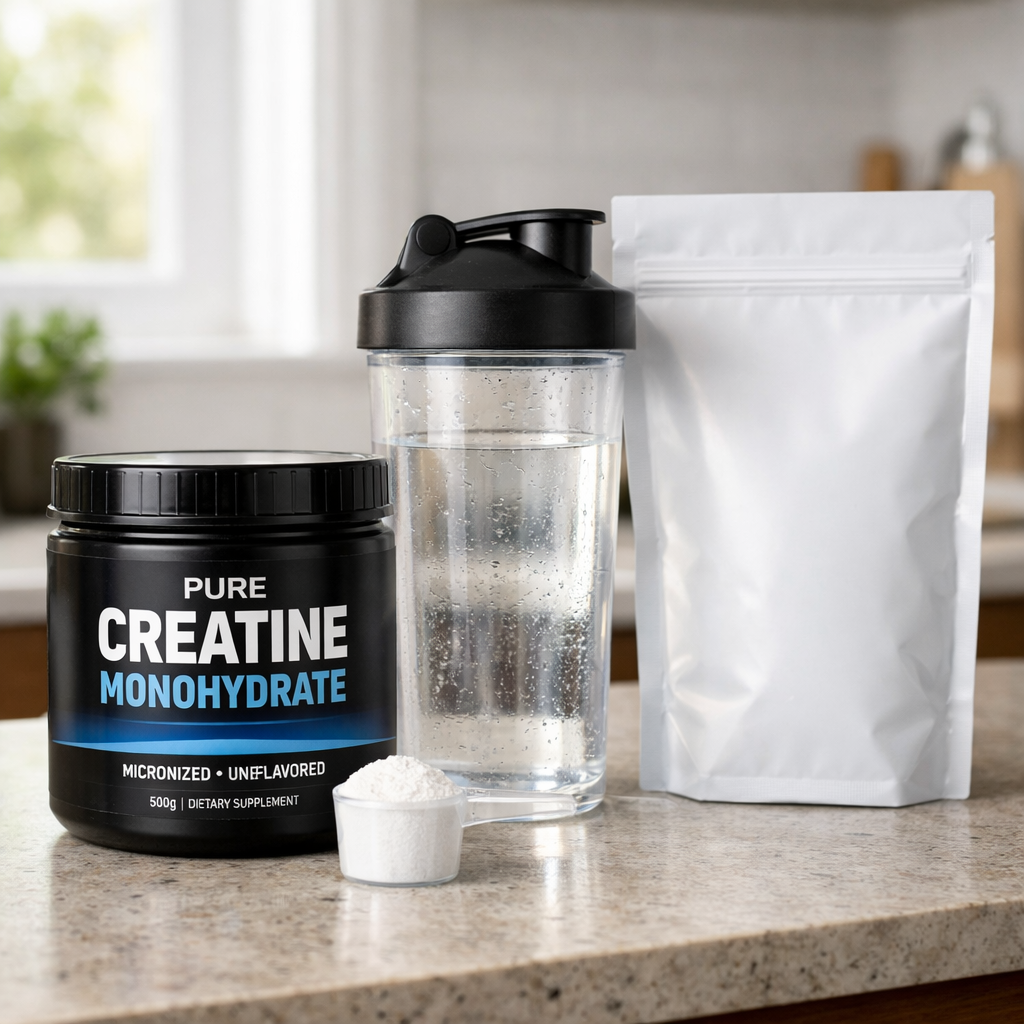 A simple, beginner-friendly supplement setup focuses on a few high-evidence basics.
For strength training, creatine is one of the most reliable ergogenic aids. Daily use matters more than timing. Expect better performance on repeated sets and sprints, and gradual improvements in training quality over time.
Great for
If you struggle to hit protein through whole foods, a shake can reduce decision fatigue and make dieting easier. For fat loss, higher protein can help fullness and preserve lean mass when paired with resistance training.
Great for
Iron can dramatically improve fatigue and exercise tolerance when deficiency exists, but excess iron can be harmful. Testing often includes ferritin and hemoglobin, and interpretation depends on inflammation, heavy menstrual bleeding, pregnancy, diet, and endurance training.
Great for
B12 is essential for red blood cell formation and nervous system function. People avoiding animal products need reliable B12 sources. Some medications and GI conditions reduce absorption, making supplementation or medical dosing necessary.
Great for
Higher protein and adequate fiber generally increase satiety, improve meal structure, and reduce snacking. These effects are smaller than marketing claims but meaningful over months when they improve adherence.
Great for
Caffeine may slightly increase energy expenditure and reduce perceived effort. The bigger benefit is often better workouts and improved daily activity. If it worsens sleep, it can backfire by increasing appetite and reducing recovery.
Great for
Creatine is not a sleep aid, but it can indirectly support recovery by improving repeated training performance and possibly reducing perceived fatigue in some contexts. If you train hard, improved training capacity can raise results more than many “recovery” products.
Great for
If magnesium intake is low, supplementation may help overall wellbeing. For sleep, results vary. GI tolerance differs by form; start low and monitor stools. Any sleep benefit is often subtle compared with consistent sleep schedule and light management.
Great for
 Good supplementation is organized, minimal, and easy to track.
Supplement labels do not guarantee what’s inside. Third-party testing reduces the chance of under-dosed ingredients, contamination, and banned substances. This matters most for athletes, stimulants, and products with long ingredient lists.
Great for
Multi-ingredient blends make it hard to know what dose you’re getting and what caused side effects. Beginners do better with one change at a time, so you can judge benefit and tolerance.
Great for
Many ingredients are not well studied in pregnancy and breastfeeding. Even “natural” products can pose risks. Prenatal supplementation should be guided by a clinician, focusing on essentials and lab-guided needs.
Great for
Certain supplements and concentrated extracts can stress organs or interact with medications. Stimulants and high-dose minerals are particularly important to review with a clinician.
Great for
Use creatine daily, add protein powder only to meet your daily protein target, and use caffeine strategically for harder sessions without harming sleep. Track strength progress and body measurements monthly rather than changing supplements weekly.
Great for
Aim for higher protein and higher fiber to manage hunger. Psyllium can be added once daily with adequate water. Caffeine can help training performance, but only if it doesn’t reduce sleep duration or quality.
Great for
The best supplements either improve training quality (creatine, caffeine, fueling) or correct a specific gap (vitamin D, B12, iron). Products that claim broad transformations rarely outperform basics.
Beginner results are limited more by inconsistent habits than by missing ingredients. Practicality and adherence often matter more than tiny effect sizes.
Risk rises quickly with complex blends, high stimulant doses, and concentrated herbal extracts; single-ingredient, well-tested products keep outcomes predictable.
If sleep suffers, most supplement benefits disappear. Timing and total lifestyle load often determine whether a supplement “works.”
Frequently Asked Questions
No. You can build muscle with progressive training, enough protein, adequate calories, and sleep. Supplements can help with convenience or performance, but they are not required.
Creatine monohydrate has a strong safety record at typical daily doses for healthy adults. Some people gain a small amount of water in muscle, which may increase scale weight; it does not inherently increase body fat.
Pick one goal, choose a single-ingredient product with strong human evidence, confirm the dose matches studied amounts, and use it consistently for several weeks before deciding whether it helps.
A basic multivitamin can be a reasonable insurance policy if diet quality is inconsistent, but it won’t replace nutrient-dense foods. If you suspect a deficiency, targeted testing and targeted supplementation are often more effective.
Symptoms are non-specific, so testing is the best approach. Discuss labs with a clinician, especially if you have fatigue, low sun exposure, dietary restrictions, heavy menstrual bleeding, or endurance training load.
 Food remains the foundation; supplements fill specific gaps or support performance.
For most beginners, the most effective approach is minimal: use creatine for strength and muscle, use protein powder to reliably meet protein needs, and consider caffeine strategically if it doesn’t harm sleep. Add vitamin D, omega-3, or other nutrients primarily when diet or labs indicate a gap, and prioritize third-party tested, single-ingredient products. Start with one supplement at a time, track outcomes that match your goal, and reassess after consistent use.
Track meals via photos, get adaptive workouts, and act on smart nudges personalised for your goals.
AI meal logging with photo and voice
Adaptive workouts that respond to your progress
Insights, nudges, and weekly reviews on autopilot
Great for
Reliable acute performance benefits, widely studied, inexpensive, and effective when timed correctly; main limitation is tolerance and sleep disruption.
Great for
High usefulness when deficiency is present; benefit is smaller when levels are already sufficient. Safe when dosed conservatively and monitored.
Great for
Good evidence for triglyceride lowering and general health support; performance and muscle benefits are less consistent, but many people under-consume EPA/DHA.
Great for
Strong evidence for improving stool regularity and modestly lowering LDL cholesterol; also supports fullness. Very practical and low-cost, but requires proper hydration and spacing from medications.
Great for
Caffeine can improve training output, but not if it compromises sleep. If you have insomnia, panic symptoms, uncontrolled blood pressure, or reflux, lower doses or avoiding caffeine may produce better overall results.
Great for
Beta-alanine increases muscle carnosine, helping buffer acidity. Benefits are most relevant for events like rowing, mid-distance running, cycling intervals, and high-rep sets. Tingling is common and harmless, but can be uncomfortable.
Great for
For endurance beyond typical gym workouts, fueling often beats most supplements. Carbohydrate supports performance and perceived effort; sodium and fluids support hydration. This is especially helpful in heat or heavy sweaters.
Great for
Magnesium supports normal nerve and muscle function. Benefits are most likely if your intake is low. Some forms can cause diarrhea; others are better tolerated. It is not a guaranteed sleep supplement, but it may help some people indirectly.
Great for
Calcium is best obtained from food (dairy, fortified alternatives, certain greens). If intake is consistently low, supplementation can help meet needs, particularly in older adults or those avoiding dairy. Excess supplemental calcium may not be appropriate for everyone.
Great for
Zinc supports immune function and wound healing. If you eat little meat or seafood, or have malabsorption risk, you may fall short. Long-term high-dose zinc can lower copper and cause anemia-like symptoms.
Great for
Some ingredients show modest metabolic effects in studies, but real-world fat loss differences are typically small. Concentrated extracts can cause GI upset, jitteriness, and in rare cases serious liver issues. If you use anything in this category, prioritize single-ingredient products and conservative dosing, and stop if symptoms occur.
Great for
These products can cause temporary scale drops but do not reduce body fat. Risks include dehydration, electrolyte imbalance, cramping, dependence, and worsening gut health.
Great for
Melatonin is a timing signal more than a sedative. Small doses can help shift circadian rhythm. Too much can cause next-day grogginess or vivid dreams. Long-term nightly use should be individualized and discussed if you have mood disorders or take interacting medications.
Great for
Some evidence suggests tart cherry may aid recovery markers and sleep quality in certain populations, and glycine may support sleep onset for some people. Effects tend to be small and are not substitutes for adequate calories, protein, and sleep duration.
Great for
Different forms can change tolerability and usefulness. For example, plant proteins may require larger servings to match amino acid quality; omega-3 labels vary in EPA/DHA content; some magnesium forms are more likely to loosen stools.
Great for
If amounts are hidden, you can’t verify effective dosing. If marketing emphasizes testimonials or “detox,” it usually signals weak evidence. A good product is boring: known ingredient, known dose, known purpose.
Great for
Some supplements can affect platelet function or bleeding tendency. If you take anticoagulants or have a bleeding disorder, discuss any new supplement, especially omega-3s at high doses and herbal products.
Great for
The foundation should be adequate calories, protein, sleep, and supervised training. Stimulant-heavy pre-workouts and fat burners are unnecessary and increase risk. If supplements are used, prioritize basics like protein food strategies and possibly creatine with appropriate supervision.
Great for
Performance often improves most from fueling and hydration. Use carbs and sodium during longer sessions, and consider caffeine for key workouts. Beta-alanine is optional if your sport involves sustained hard efforts and intervals.
Great for
Start with food first. Add vitamin D if you likely run low or confirmed low, omega-3 if you rarely eat fatty fish, and psyllium if fiber intake is consistently low. Reassess after a few months and avoid adding unnecessary extras.
Great for
