December 4, 2025
A ranked, practical list of Indian foods richest in vitamin C, with real-world tips on buying, prepping, and pairing for better absorption.
Amla and guava top the list by vitamin C density; peppers and kiwi follow.
Eat vitamin C foods raw or lightly cooked—heat and water reduce content.
Pair vitamin C with dals, leafy greens, or millets to boost iron absorption.
Small, frequent servings (salads, chutneys, fruit snacks) add up quickly.
Choose seasonal, affordable options; variety beats relying on one food.
Ranking is based primarily on vitamin C content per 100 g (raw, edible portion), using widely accepted nutrition data. Tie-breakers include typical serving size in Indian diets, affordability, availability across regions/seasons, and ease of eating raw. Where values vary by cultivar or ripeness, approximate ranges are indicated.
Vitamin C supports immunity, collagen formation, wound healing, and enhances non-heme iron absorption from plant foods—especially relevant for predominantly vegetarian Indian diets. It’s water-soluble and heat-sensitive, so raw or minimally cooked sources give the best returns.
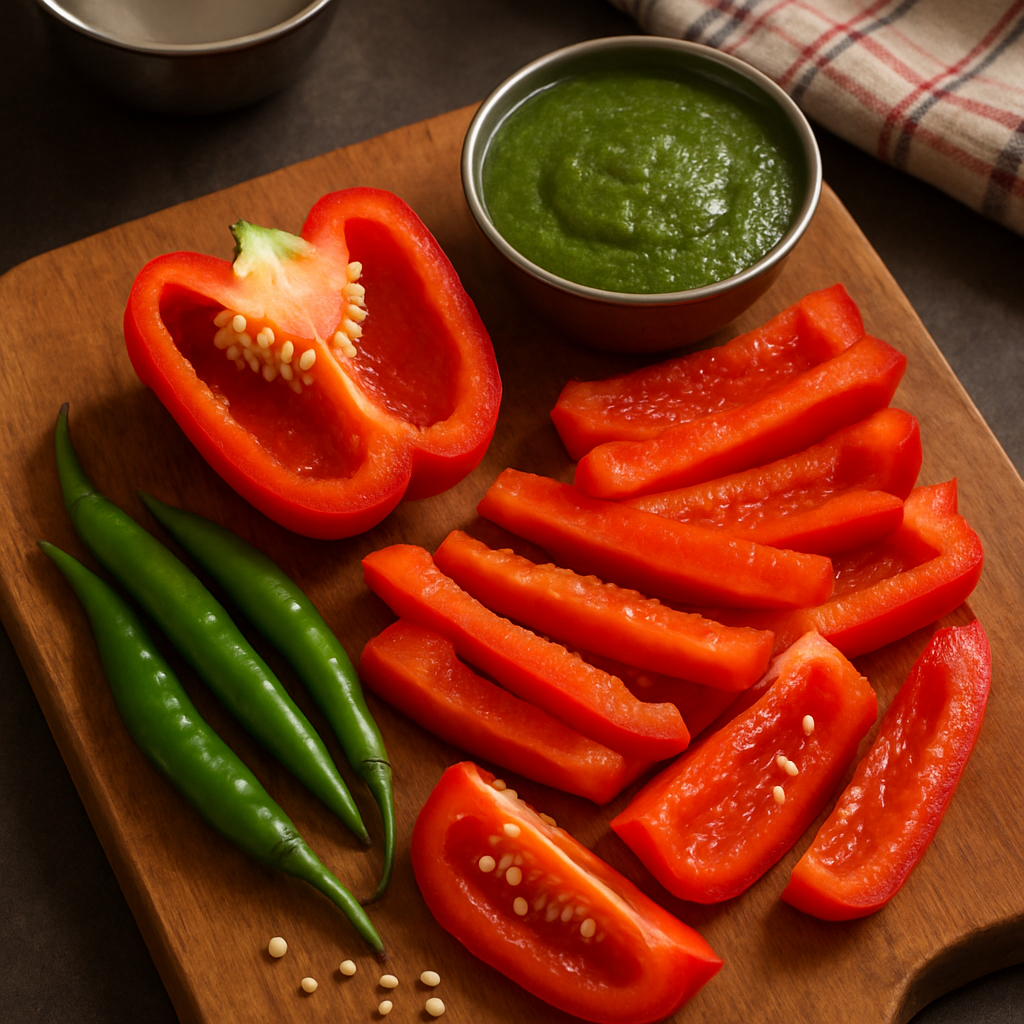 Peppers and chilies deliver big vitamin C—keep them raw or barely cooked.
Highest natural concentration and widely available across India; commonly eaten raw, in chutneys, or as fresh juice.
Great for
Exceptional vitamin C density, high fiber, and affordability—commonly available year-round in many Indian cities and towns.
Great for
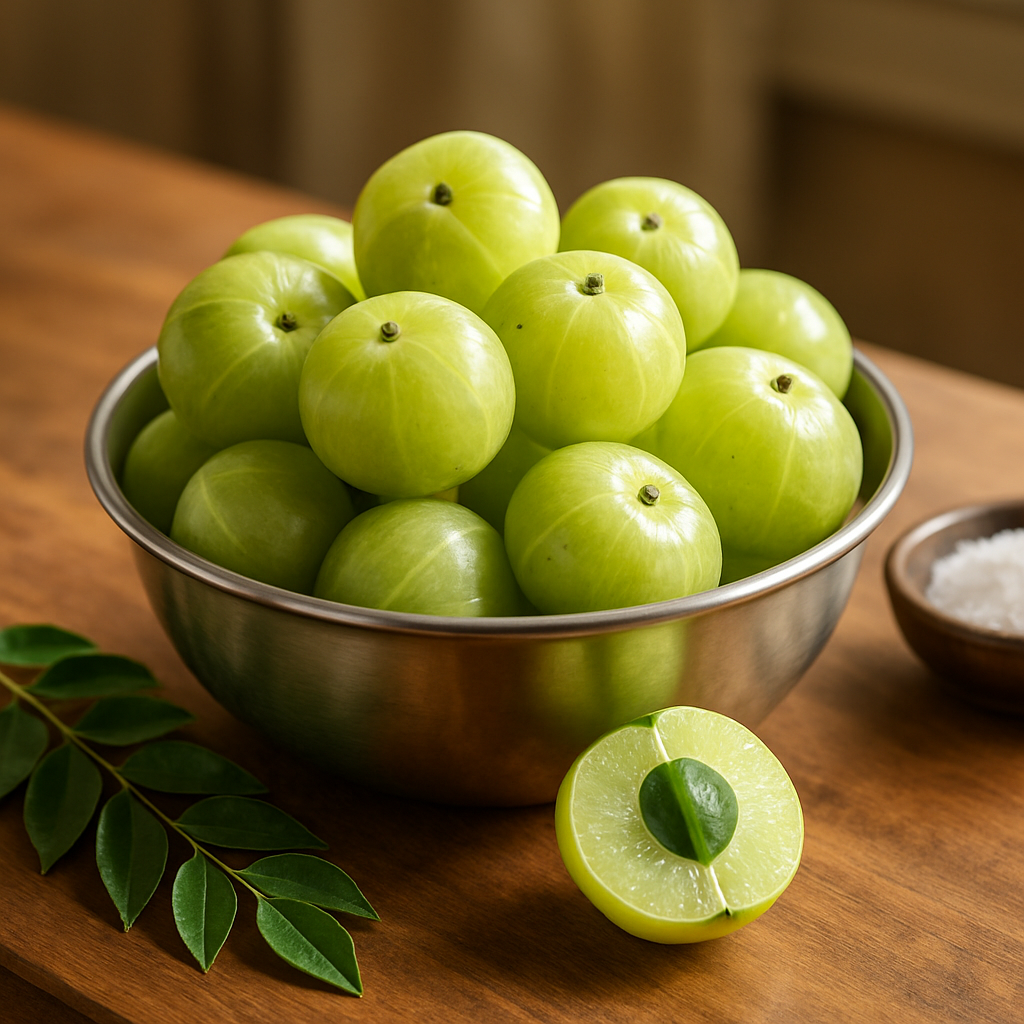 Amla is India’s most concentrated natural source of vitamin C.
Non-citrus foods often beat citrus in vitamin C density: amla, guava, peppers, and kiwi top the chart.
Preparation matters: vitamin C is water-soluble and heat-sensitive. Raw, lightly steamed, or quick sauté preserves the most.
Small amounts add up: frequent use of chilies, peppers, and fruit sides throughout the day can easily meet daily needs.
Smart pairing improves iron uptake: combine vitamin C foods with dals, millets, spinach, or chickpeas for better non-heme iron absorption.
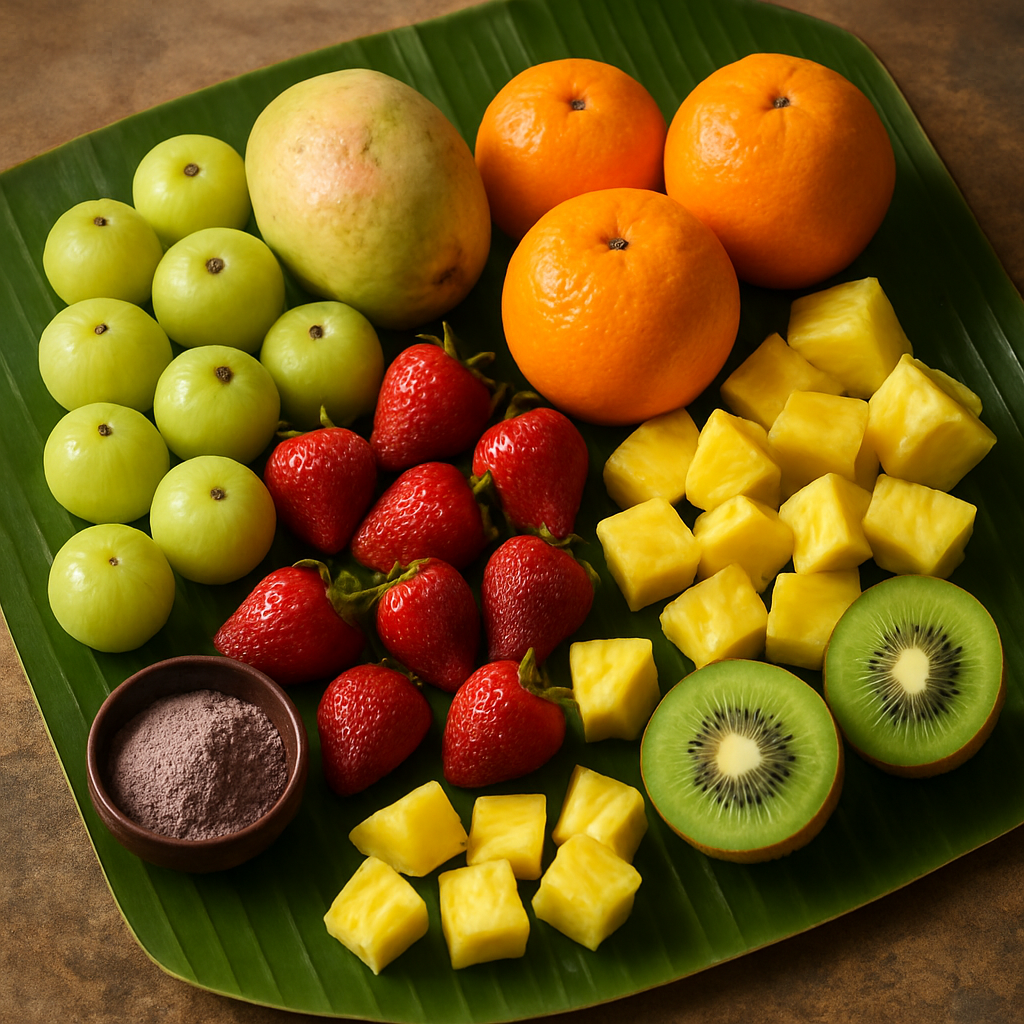 A varied Indian fruit platter delivers vitamin C plus fiber and phytochemicals.
Frequently Asked Questions
Most adults need about 75–90 mg per day. Needs can be higher for smokers and during infection or stress. A single amla or one guava can meet or exceed the daily requirement.
Yes—vitamin C is heat- and water-sensitive. Minimize cooking time, use less water, and eat raw where possible. Steaming or quick sauté retains more than boiling.
With meals is ideal to improve iron absorption from plant foods (dals, millets, leafy greens). If you have acidity, pair with curd/yogurt or eat earlier in the day.
Juice can provide vitamin C, but whole fruit adds fiber, slows sugar absorption, and is more filling. Prefer whole fruit or small portions of fresh, unsweetened juice.
Drying and storage reduce vitamin C compared to fresh amla. Powder is still useful for other polyphenols but has lower vitamin C—use fresh amla when possible.
To cover daily vitamin C, rotate high-density options: amla, guava, peppers, and kiwi, with seasonal fruits like papaya and strawberries. Keep prep simple and raw, and pair with plant iron sources for better nutrient synergy. Build small, frequent servings into meals—salads, chutneys, fruit plates—and you’ll hit your targets easily and affordably.
Track meals via photos, get adaptive workouts, and act on smart nudges personalised for your goals.
AI meal logging with photo and voice
Adaptive workouts that respond to your progress
Insights, nudges, and weekly reviews on autopilot
Often extremely rich in vitamin C; although typical portions are small, daily use in chutneys, raitas, and salads adds up.
Great for
Very high vitamin C content and versatile raw use in salads, wraps, and dips; increasingly available in Indian markets.
Great for
High vitamin C with excellent bioavailability; convenient raw snack; now commonly stocked in Indian supermarkets.
Great for
High vitamin C when eaten raw or lightly steamed; increasingly available across Indian metros and larger towns.
Great for
Good vitamin C plus digestive enzymes; widely available and affordable across India.
Great for
Solid vitamin C in a small serving; seasonal availability in India (e.g., winter harvests from Mahabaleshwar).
Great for
Reliable vitamin C source with good hydration; widely available and familiar in Indian diets.
Great for
Good vitamin C with bromelain enzymes; commonly available fresh and as cut packs.
Great for
