December 19, 2025
Training creates the stimulus, but recovery is where your body rebuilds and improves. This guide explains muscle repair, sleep, rest days, nutrition, and evidence-based recovery habits you can apply immediately.
Muscle growth and strength gains require recovery capacity that matches your training load.
Sleep is the highest-impact recovery tool because it supports repair, learning, hormones, and immune function.
Rest days are not “no progress” days; they are a planned part of adaptation and injury prevention.
Nutrition and hydration determine whether training damage becomes improvement or lingering fatigue.
Use measurable signals (performance, soreness, sleep, mood) to adjust volume and intensity before you burn out.
This pillar guide is organized as a practical recovery system. It explains the physiology of muscle repair, then covers the highest-leverage recovery inputs (sleep, rest days, training design, nutrition, hydration, stress management, and selective modalities). Recommendations prioritize interventions with strong evidence, high impact, low risk, and real-world feasibility, and include simple decision rules for different goals.
Most plateaus, nagging injuries, and inconsistent progress come from a mismatch between training stress and recovery resources. Understanding recovery lets you train hard enough to progress while staying healthy, consistent, and motivated.
Recovery is the process of restoring performance capacity and building a higher baseline after training stress. Strength and hypertrophy improve when the body repairs microdamage, restores fuel, reduces inflammation to a productive level, and reinforces neuromuscular coordination. Some soreness and fatigue are normal, but persistent performance drops signal recovery debt. Adaptation is specific: muscles, tendons, connective tissue, and the nervous system recover on different timelines, which is why program design and rest days matter.
Great for
The main drivers of recovery demand are training volume (total hard work), intensity (load or effort), proximity to failure, novelty, and frequency. Eccentric-heavy and unfamiliar exercises create more soreness and require more time. High-intensity endurance work strains the cardiovascular system and glycogen stores, while heavy lifting challenges the nervous system and connective tissue. Recovery is not just time off; it is matching your training dose to what you can consistently absorb.
Great for
 Consistent, high-quality sleep is the highest-impact recovery lever for most people.
Most adults perform best with roughly seven to nine hours per night, but training increases the value of the upper end of that range. If you consistently wake without an alarm, maintain stable energy, and your training performance is improving, your sleep amount is probably sufficient. If you rely on caffeine to function, feel unusually sore, or your lifts and pace regress, treat sleep as a primary bottleneck.
Great for
Regular bed and wake times reinforce circadian rhythm, improving sleep depth and efficiency. Large swings between weekdays and weekends can create “social jet lag,” reducing recovery even if total hours look adequate. A consistent wake time is often the easiest anchor; bedtime can then shift earlier as needed to meet duration goals.
Great for
Complete rest means no formal training and minimal structured activity. Active rest uses very easy movement to reduce stiffness and support mood. Choose complete rest when you feel systemically fatigued, your sleep is poor, or joints feel irritated. Choose active rest when you feel stiff, slightly sore, and mentally better with movement, but not truly drained.
Great for
Many lifters progress well with one to three rest days weekly, depending on volume, intensity, age, sleep, and life stress. Higher volume blocks, heavy compound lifting, and hard intervals often require more rest. Beginners may recover quickly from low absolute loads, but can still need rest due to novelty. The correct number is the one that keeps your key sessions high quality week after week.
Great for
 Active recovery can reduce stiffness and improve readiness without adding meaningful fatigue.
Protein provides essential amino acids that support muscle protein synthesis. A common effective range for active adults is about 1.6 to 2.2 grams per kilogram of body weight per day, with the lower end often sufficient for many and the upper end useful during fat loss or very high training volume. Distribute protein across meals to make the target easier and to support repeated repair signals.
Great for
Carbs are the main fuel for moderate to high intensity work and support repeated hard sessions. Low carb availability often shows up as reduced training output, higher perceived effort, and longer recovery. If you train frequently or do endurance work, prioritize carbs around training and across the day. If your goal is fat loss, use carbs strategically to protect your hardest sessions.
Great for
These can reduce perceived soreness and improve range of motion temporarily. Use them when they help you move well in the next session, especially if stiffness alters technique. Avoid turning mobility into high-intensity work that adds fatigue. The goal is better movement quality, not maximal discomfort.
Great for
Massage can improve comfort and perceived recovery. It may help with relaxation and sleep when used at appropriate intensity. It should not be so aggressive that it increases soreness. Treat massage as a tool to support consistency, not as a fix for poor programming or chronic overload.
Great for
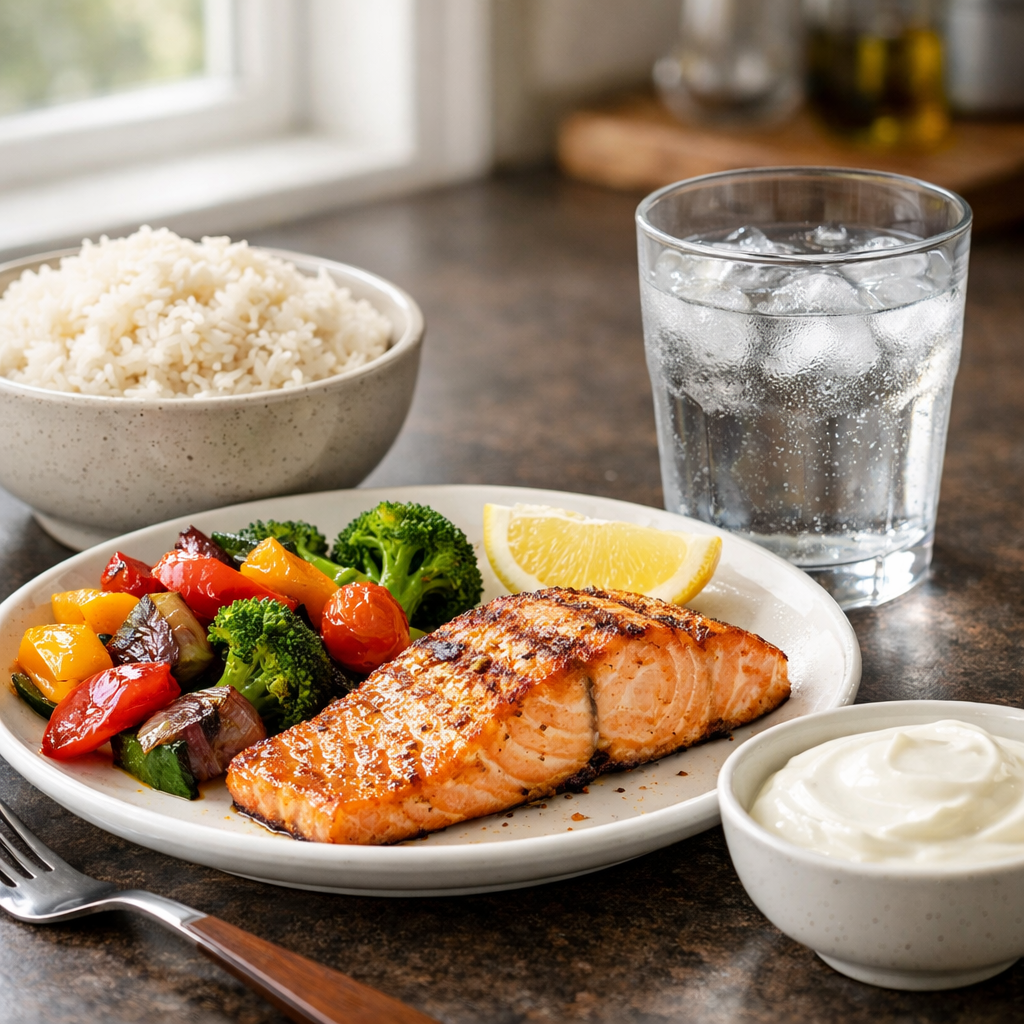 Daily protein, carbs, and hydration determine whether training stress becomes adaptation.
Persistent soreness often comes from too much novelty, too much eccentric load, too many sets close to failure, or insufficient sleep and calories. Reduce volume temporarily, keep exercises consistent for several weeks, and avoid failure on most compound lifts. Ensure protein and carbs are adequate, and use light movement on off days. If soreness is localized to joints or tendons rather than muscle, treat it as a load-management issue.
Great for
This pattern can reflect high stress, late caffeine, late training, irregular schedule, or insufficient wind-down. Keep wake time consistent, shift caffeine earlier, create a short pre-sleep routine, and reduce evening light exposure. If training intensity is very high, reduce it for a week while you stabilize sleep. Poor sleep is a primary limiter; fix it before adding more training.
Great for
Recovery is a capacity problem, not a willpower problem: when sleep, calories, and stress are misaligned, more effort usually produces worse results.
The biggest wins come from foundations (sleep consistency, smart volume, adequate protein and carbs) because they affect every adaptation pathway simultaneously.
Soreness is an unreliable progress metric; performance trends and session quality are better indicators of whether you are adapting.
Most “recovery tools” work best as symptom reducers that help you train well, not as primary drivers of muscle repair.
Frequently Asked Questions
It depends on training dose, exercise type, and your sleep and nutrition. Many people can train the same muscle again within one to three days if volume and intensity are appropriate. Heavy eccentric work, high volume, and new exercises often require longer. Use performance and soreness trends, not a fixed number of days.
No. Soreness can happen with effective training, especially with novelty, but it is not required for hypertrophy or strength gains. You can make excellent progress with minimal soreness if you progress gradually and manage volume and effort.
Light stretching can improve comfort and range of motion, but it is not a primary driver of muscle repair. If stretching helps you feel better and move well, use it briefly. Avoid intense stretching that increases pain or adds fatigue.
Cold exposure can reduce soreness and help you feel ready sooner, which can be useful with back-to-back sessions or competitions. If your main goal is maximizing strength and muscle over time, frequent cold plunges immediately after lifting may not be ideal. Consider using it strategically rather than daily after strength sessions.
Track training performance (loads, reps, pace), perceived effort, sleep duration and quality, soreness that affects movement, mood and motivation, and appetite. When several of these worsen for multiple days, reduce volume or take a deload.
Recovery is the process that turns training stress into stronger muscles, better fitness, and improved performance. Prioritize sleep consistency, planned rest and deloads, adequate protein and carbs, and hydration before relying on recovery gadgets. If progress stalls, adjust training volume and lifestyle stress first, then add targeted modalities only as needed.
Track meals via photos, get adaptive workouts, and act on smart nudges personalised for your goals.
AI meal logging with photo and voice
Adaptive workouts that respond to your progress
Insights, nudges, and weekly reviews on autopilot
Sleep supports muscle repair, glycogen restoration, immune function, pain tolerance, motor learning, and hormonal regulation. Even a few nights of short sleep can impair performance, increase perceived effort, reduce training quality, and increase injury risk. For most adults, consistent sleep duration and timing matter more than any recovery gadget. If you can improve only one recovery factor, improve sleep quality and consistency.
Great for
Rest days allow fatigue to drop so fitness can express itself. They also reduce overload on joints and tendons and help maintain motivation. Deloads reduce volume and/or intensity for several days to a week to reset accumulated fatigue, especially during long training blocks. The best schedule is individual: some thrive on frequent lighter sessions; others need true rest days to maintain quality and consistency.
Great for
Recovery is limited by available building blocks and energy. Protein provides amino acids for repair and growth; carbohydrates restore glycogen and support training intensity; dietary fats support overall health and energy needs. Under-eating is a common cause of stagnation, especially when training volume increases. Timing can help, but daily totals and consistency matter most.
Great for
Fluid balance affects strength, endurance, cognitive function, and perceived effort. Sweating causes fluid and electrolyte loss; replacing both supports circulation, temperature regulation, and muscle contraction. Inadequate hydration can feel like “bad recovery” even with good sleep and food, especially in hot environments or long sessions.
Great for
Gentle movement increases blood flow, reduces stiffness, and can improve next-day readiness without adding significant fatigue. Walking, easy cycling, mobility work, and very light technique practice are common options. Active recovery is especially useful when you feel heavy or stiff but not truly overreached.
Great for
Work stress, poor sleep, and emotional strain share biological pathways with training stress. High life stress increases recovery cost, often showing up as higher resting heart rate, worse sleep quality, low motivation, and unusually hard sessions. Recovery plans work best when they account for total stress, not just what happens in the gym.
Great for
Some tools can reduce soreness or improve readiness, but they do not replace sleep, programming, and nutrition. Massage and foam rolling can improve perceived soreness and range of motion. Cold water immersion may reduce soreness but can blunt some strength and hypertrophy signaling if used immediately after lifting; it may be more useful when competition readiness or back-to-back sessions matter. Heat can relax muscles and improve comfort. Compression and contrast approaches may help some people, but effects vary.
Great for
Supplements are minor compared with sleep, food, and training design. Creatine monohydrate supports strength and lean mass over time. Protein powder can help meet targets. Caffeine can improve training output but can impair sleep if used too late. Omega-3s may support general health; evidence for direct recovery enhancement is mixed. Magnesium can help sleep in people with low intake. Avoid assuming soreness reducers equal better adaptation; masking fatigue can increase injury risk.
Great for
The simplest indicators are performance trends, session quality, sleep duration and continuity, appetite, mood, and soreness that lingers or worsens across days. Objective tools like resting heart rate, heart rate variability, and morning body weight can add context, but they should support, not override, performance and sleep signals. A practical approach is to reduce volume or intensity when multiple signals worsen for several days.
Great for
Recovery priorities change with your goal and training style. Muscle gain often needs higher energy and more sleep, with rest days to protect joints and keep session quality high. Fat loss requires careful fatigue management because low energy intake reduces recovery capacity. Endurance goals need aggressive fueling and hydration, plus managing the combined stress of long sessions. Team sports and high-frequency training benefit from sleep consistency, carb availability, and smart use of modalities when schedules are compressed.
Great for
A simple wind-down routine reduces arousal and helps transition into sleep. Helpful steps include dimming lights, limiting stimulating work, avoiding heavy meals right before bed, and using relaxing activities like light reading or stretching. If your mind races, consider a short brain-dump note to park tasks for tomorrow.
Great for
Caffeine can improve performance, but it can also reduce sleep duration and quality if taken too late. Many people do best keeping caffeine earlier in the day and using the minimum dose that helps. If your sleep is inconsistent, improving caffeine timing can produce faster recovery gains than adding supplements.
Great for
Morning light helps set your internal clock and can improve nighttime sleepiness. Bright light late at night can delay sleep onset in some people. Practical options include getting outside soon after waking and keeping evenings dimmer, especially in the last hour before bed.
Great for
A cool, dark, quiet room supports better sleep continuity. If noise is unpredictable, consider consistent background sound. If light leaks in, darkening the room can reduce awakenings. Small improvements in the environment often produce outsized recovery benefits because they make good sleep easier to repeat.
Great for
Short naps can improve alertness and training readiness, especially after poor sleep. Keep naps earlier in the day and short enough to avoid grogginess and to protect nighttime sleep. If you struggle to fall asleep at night, naps may be a sign that nighttime sleep needs attention first.
Great for
A deload reduces fatigue while maintaining movement skill. Common approaches include reducing volume substantially while keeping some intensity, or reducing intensity while keeping technique work. The goal is to finish the deload feeling eager, not exhausted. Deload timing can be planned every several weeks or triggered when performance and recovery signals trend down for multiple sessions.
Great for
Unfamiliar movements and high-eccentric exercises drive soreness. You can reduce recovery cost by adding new exercises gradually, limiting extreme range or eccentric overload early on, and keeping total hard sets appropriate. Rotating exercises too frequently can keep soreness high and slow skill development; rotating too rarely can irritate joints. The balance depends on your tolerance and goals.
Great for
Sets taken very close to failure can be effective for hypertrophy, but they increase fatigue and can reduce next-session performance. Many people do well using failure selectively: isolations and safer movements more often, heavy compounds less often. Leaving a small buffer on most sets can improve weekly training quality and long-term progress.
Great for
Combining lifting and endurance increases total recovery demand. To reduce conflict, separate hard endurance sessions and heavy lower-body lifting when possible, fuel with adequate carbs, and avoid stacking multiple maximal sessions day after day. Easy endurance can function as active recovery, but hard intervals are a major stressor that needs intentional spacing.
Great for
Recovery depends on energy availability. In a surplus, recovery is typically easier and performance is more stable. In a deficit, recovery capacity shrinks, making sleep, rest days, and volume management more important. Common signs you are under-fueled include plateauing strength, persistent soreness, irritability, cold sensitivity, and declining training motivation.
Great for
You do not need perfect timing, but eating a balanced meal within a few hours before training helps performance. After training, protein supports repair and carbs help replenish glycogen, especially if you train again soon. If appetite is low after intense sessions, liquid options can help. Consistency across the day usually matters more than any single window.
Great for
Iron supports oxygen transport and endurance capacity; low iron can feel like poor recovery. Vitamin D status can affect muscle function and overall health. Calcium and magnesium support neuromuscular function. A varied diet with fruits, vegetables, whole grains, dairy or fortified alternatives, and adequate protein usually covers needs, but restrictions or low calorie intake increase deficiency risk.
Great for
Use thirst, urine color trends, and body weight changes around long sessions as guides. For heavy sweaters or long workouts, include sodium and fluids to maintain performance. If you routinely finish sessions with headaches, cramps, or big weight drops, treat electrolytes as part of recovery, not just performance.
Great for
Cold exposure can reduce soreness and improve perceived readiness, particularly when you need to perform again soon. If your primary goal is maximizing hypertrophy or strength over months, frequent cold immersion immediately after lifting may not be ideal. A compromise is to use it after competitions, during dense schedules, or separated from key lifting sessions.
Great for
Heat can promote relaxation and reduce stiffness. Sauna use may support cardiovascular adaptations and relaxation for some, but it also increases fluid loss, so hydration matters. If heat makes sleep worse or leaves you dehydrated, it can backfire. Use heat as a comfort and routine tool, not as a substitute for sleep.
Great for
Some people report reduced soreness and improved leg heaviness, especially after long endurance sessions or travel. Evidence is mixed and effects are often small. If you like them and they do not cause discomfort, they can be a minor add-on, but prioritize foundational recovery first.
Great for
Reducing pain is not the same as improving recovery. Regular use of anti-inflammatories can carry health risks and may interfere with some adaptive processes. If pain requires medication, it can be a sign your training load, technique, or recovery is mismatched. Seek medical guidance for persistent pain or injury.
Great for
This usually indicates accumulated fatigue, under-fueling, or insufficient sleep. First, reduce weekly volume and keep some intensity to maintain skill. Second, confirm calorie and carb intake match your workload. Third, check whether life stress has increased. A short deload and a return to progressive overload often restores progress better than pushing through.
Great for
Connective tissues recover more slowly than muscle. Rapid volume increases, repetitive movement patterns, poor technique, and insufficient rest days are common triggers. Gradually ramp volume, vary grips and angles, and keep some work in moderate effort ranges. Include rest days and consider splitting high-stress movements across the week. Persistent pain deserves assessment by a qualified clinician.
Great for
Energy deficit reduces recovery capacity, so you must manage fatigue more aggressively. Keep protein high, prioritize sleep, and reduce training volume while maintaining enough intensity to preserve strength. Place more carbs around training and avoid stacking too many maximal sessions. If fatigue becomes chronic, consider diet breaks or a smaller deficit.
Great for
