December 19, 2025
Fat loss and muscle gain are both achievable on an Indian vegetarian diet when protein, calories, strength training, and recovery are aligned. This guide gives a complete, practical system: targets, food choices, meal templates, timing, supplements, and common mistakes to avoid.
For fat loss with muscle gain, prioritize a small calorie deficit, high protein, and progressive strength training.
Most Indian vegetarian diets fail on protein density, leucine per meal, and hidden calories from oils, nuts, and sweets.
Build meals around high-protein anchors like milk/curd/paneer, soy, dals plus grains, and whey for convenience.
Use a simple structure: protein at every meal, high-fibre carbs, controlled fats, and consistent training.
Track outcomes with weekly averages of bodyweight, waist, gym performance, and hunger rather than day-to-day noise.
This is a complete guide organized as a practical checklist: set targets, choose high-protein Indian vegetarian foods, assemble meals with templates, then adjust using measurable feedback. Recommendations are based on established nutrition principles for body recomposition: energy balance, protein distribution and quality, resistance training stimulus, sleep, and adherence.
Indian vegetarian eating often becomes carb-heavy and fat-heavy with low protein density, which slows fat loss and limits muscle gain. A clear framework reduces guesswork, helps you eat familiar foods, and improves results without extreme restriction.
Fat loss requires a calorie deficit, while muscle gain requires adequate protein and a strong training stimulus. For most people seeking fat loss and muscle gain together, aim for a small deficit and let training and protein drive muscle retention and growth. Start with a conservative deficit so performance and hunger stay manageable.
Great for
If you do not want formulas, use a 2-week observation method. Eat a consistent pattern for 14 days, track morning bodyweight daily, and take a weekly average. If the weekly average is stable, you are near maintenance. If it rises, you are in a surplus; if it falls quickly, your deficit may be too large. Then adjust by a small amount and reassess for another 10 to 14 days.
Great for
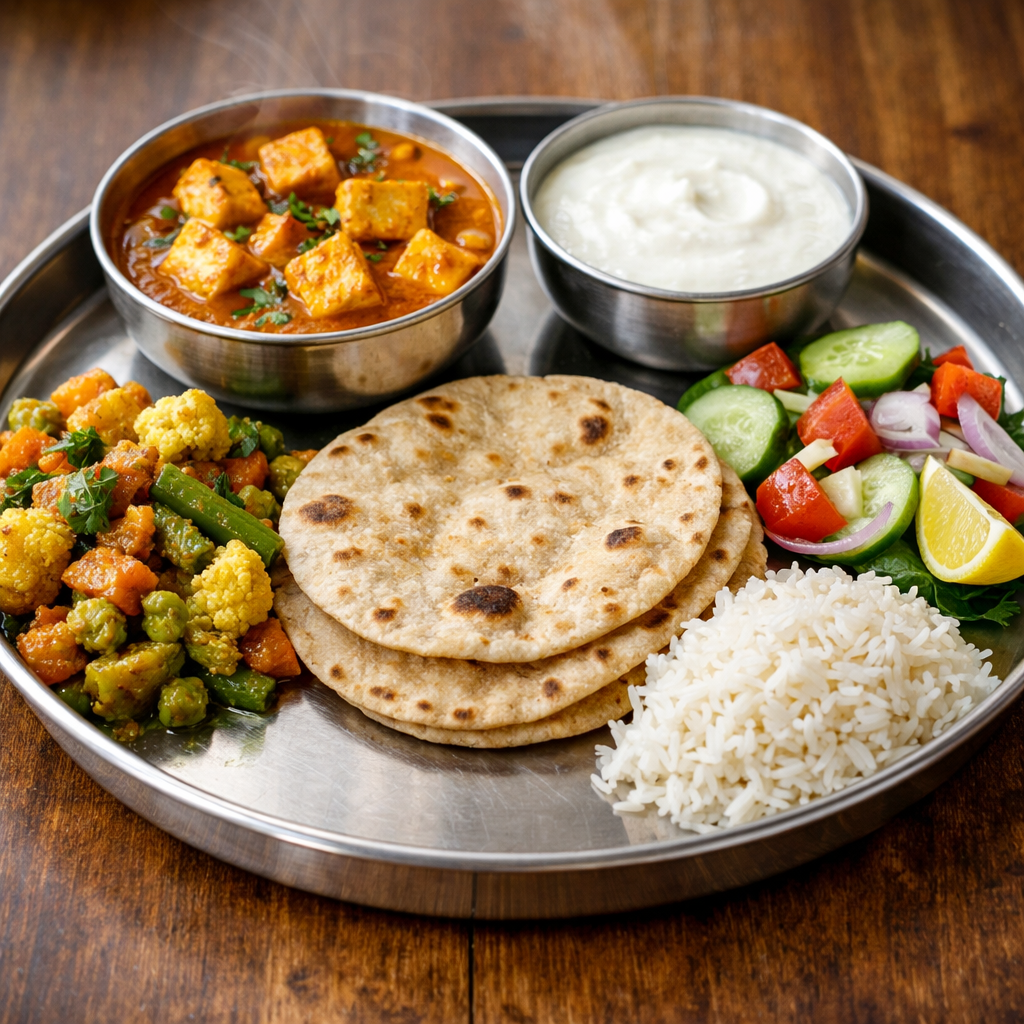 A simple protein-first Indian vegetarian plate: protein anchor, vegetables, controlled carbs, measured fats.
Choose one protein anchor and build around it. Options include Greek yogurt or hung curd bowl with fruit; whey shake plus fruit; besan chilla with extra curd; tofu bhurji with roti; oats made with milk plus whey mixed after cooking. Keep added sugar minimal and measure nuts, seeds, and ghee because they add calories quickly.
Great for
A common Indian lunch can become recomposition-friendly by adding a clear second protein. Example structure: dal or rajma plus a side of curd, tofu, paneer, or soy chunks; plenty of sabzi; roti or rice in a deliberate portion; salad for volume. If you are cutting, reduce oil in tadka and choose toned curd or low-fat paneer.
Great for
Nutrition supports muscle gain, but the primary signal is progressive resistance training. Aim to train major muscle groups at least two times per week with progressive overload over time. If training is inconsistent, even perfect nutrition will mostly produce weight loss rather than meaningful muscle gain. If you are a beginner, you can gain muscle even in a deficit if protein and training are solid.
Great for
Meal timing is secondary to total daily protein and calories, but it can improve performance and adherence. If you train within a few hours of eating, include carbs and protein in that meal. If you train fasted and feel low energy, try a small snack with carbs and protein. After training, eat a normal meal with protein; a whey shake is useful if a meal is delayed.
Great for
Nuts, seeds, peanut butter, ghee, coconut, and cheese can be nutritious but are very calorie-dense. In a deficit, these foods can stall fat loss even when meals look clean. Fix: measure oils and nuts, choose low-fat dairy, and add volume from vegetables, fruits, and soups.
Great for
Many Indian breakfasts are mostly carbs: poha, upma, paratha, bread, biscuits with chai. This increases hunger later and makes protein targets hard. Fix: add whey, curd, milk, tofu/paneer bhurji, or besan-based options, and keep snacks protein-forward.
Great for
Use protein powder if it helps you reliably hit protein targets without adding excessive calories. Choose a product you tolerate well and that fits your budget. Mix with water or toned milk depending on calorie needs. Treat it like a food that improves consistency.
Great for
Creatine monohydrate is one of the most evidence-supported supplements for improving strength and training performance. It is especially relevant for vegetarians who may have lower baseline creatine intake. A common approach is a consistent daily dose, paired with adequate hydration. Expect performance benefits over weeks, not overnight changes.
Great for
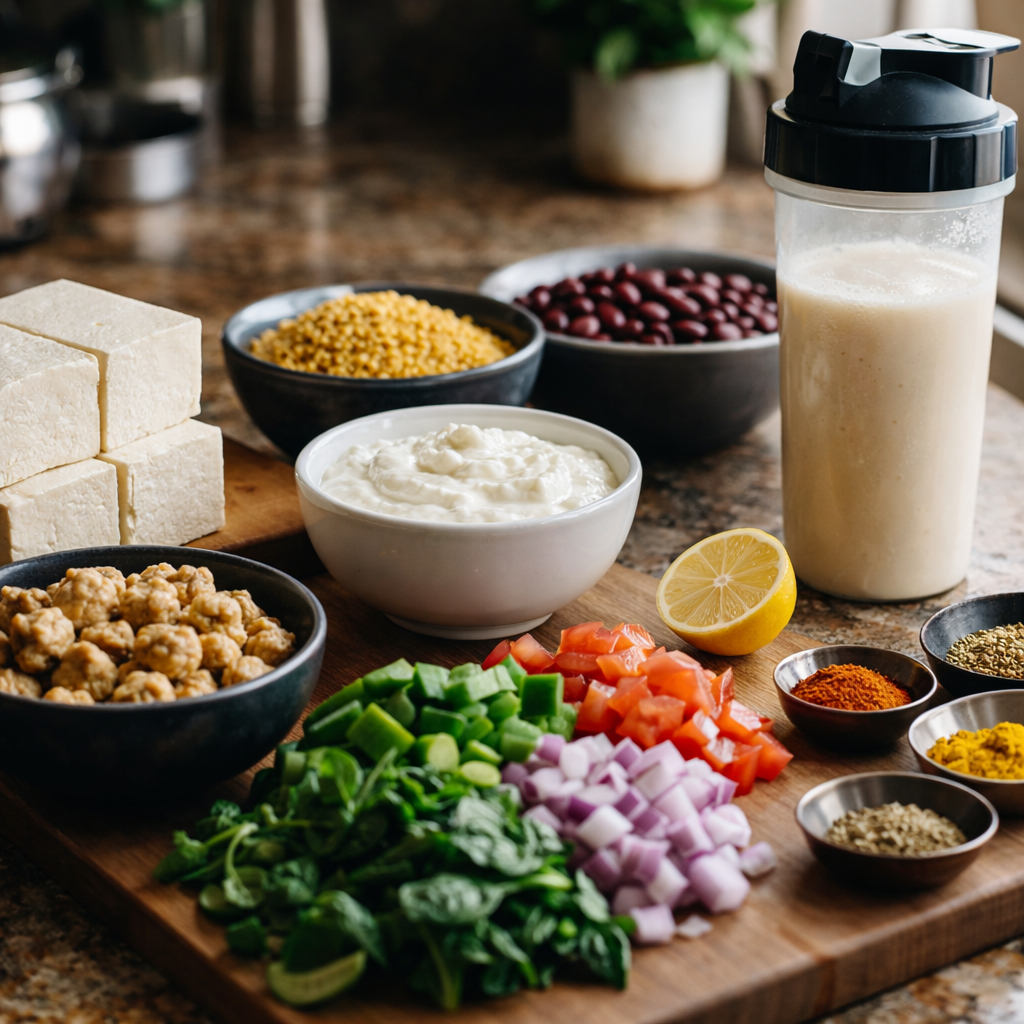 Indian vegetarian meal prep staples that make high protein easier: dairy, soy, legumes, and vegetables.
Use weekly averages rather than single weigh-ins. Track morning bodyweight daily and compare weekly averages, measure waist at the same time weekly, and log gym performance on key lifts. If weight is down but strength is stable or improving, you are likely losing fat while maintaining muscle. If weight is flat and waist is shrinking, recomposition may be happening even without scale change.
Great for
First confirm adherence: cooking oils, snacks, and weekend meals are common sources of extra calories. If adherence is good for two to three weeks and weekly averages are flat, adjust one lever: slightly reduce calories by trimming fats or refined carbs, or increase daily steps. Avoid making multiple big changes at once because you will not know what worked.
Great for
Keep roti portions consistent, increase sabzi and salad volume, and ensure a strong protein anchor beyond dal when needed. Choose toned curd, add tofu or low-fat paneer to sabzi, or include a whey shake. Reduce oil in tadka and sabzi cooking, and be careful with fried items like pakoras and pooris, which can quickly exceed calorie targets.
Great for
Idli and dosa can fit well if paired with protein. Use sambar generously, add curd or a protein shake, and control coconut chutney portions because it can be calorie-dense. For rice-based meals, prioritize a protein side such as curd, tofu, or a legume dish, and include vegetables for fullness.
Great for
The biggest difference between successful and unsuccessful vegetarian recomposition in India is protein density: meals need a clear high-protein anchor, not just “some dal.”
Most fat-loss stalls are not caused by carbs; they come from unmeasured fats and calorie-dense add-ons like ghee, nuts, sweets, and restaurant gravies.
A small deficit with stable training performance tends to beat an aggressive deficit that reduces strength and increases cravings, especially for vegetarians.
Consistency is easier when you repeat a few staples (dairy or soy plus legumes, vegetables, and controlled carbs) and adjust portions based on weekly averages.
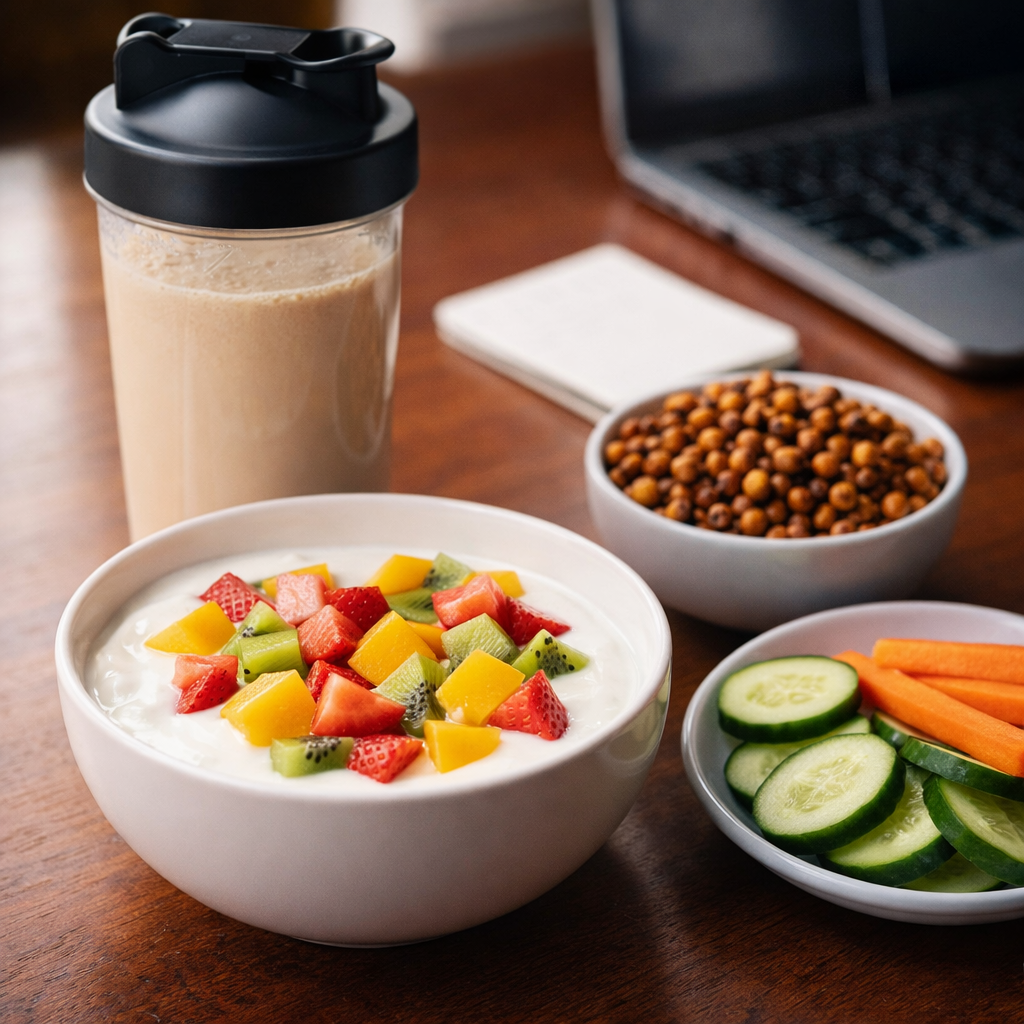 Protein-forward snacks help maintain a calorie deficit without constant hunger.
Frequently Asked Questions
Yes. It is most likely if you are a beginner, returning after a break, or have higher body fat. Keep a small calorie deficit, hit a high protein target, and follow progressive strength training. Track weekly weight and waist along with gym performance to confirm progress.
No. Fat loss depends on the calorie deficit and adherence. Rice and roti can fit well, especially for training performance. Control portions, prioritize vegetables, and ensure each meal includes a strong protein source so carbs do not dominate the plate.
Paneer is a useful protein source, but it can be calorie-dense, especially full-fat paneer. For fat loss, keep portions deliberate and consider tofu or low-fat paneer more often. Pair it with vegetables and controlled carbs rather than adding extra oils.
For most healthy adults, soy foods like tofu and soy chunks are safe and effective protein sources. If you have a specific medical condition or allergies, follow medical advice. If digestion is an issue, start with smaller portions and cook thoroughly.
Include a protein anchor at every meal, keep vegetables generous at lunch and dinner, control added oils and nuts, and keep carbs in consistent portions. Use weekly averages of bodyweight and a waist measurement to adjust portions up or down.
An Indian vegetarian diet can support fat loss and muscle gain when you keep a small calorie deficit, prioritize high protein, and train with progressive overload. Build meals around reliable protein anchors like dairy, soy, legumes plus grains, and use portion control for oils and calorie-dense add-ons. Start with a simple routine, track weekly averages, and adjust one lever at a time based on performance and measurements.
Track meals via photos, get adaptive workouts, and act on smart nudges personalised for your goals.
AI meal logging with photo and voice
Adaptive workouts that respond to your progress
Insights, nudges, and weekly reviews on autopilot
A good starting point is a small deficit that yields about 0.25% to 0.75% bodyweight loss per week. Faster loss can work short-term but often reduces gym performance and increases cravings, especially on vegetarian diets where protein is harder to hit. If your strength drops week after week, you are likely under-fueling or under-recovering.
Great for
Protein is the main nutrition lever for muscle gain and muscle retention during fat loss. A practical target for recomposition is 1.6 to 2.2 grams of protein per kilogram of bodyweight per day. If you have a higher body fat percentage, target 1.6 to 2.2 grams per kilogram of goal bodyweight or estimated lean body mass to keep targets realistic. If you are new to training, even the lower end can produce strong results.
Great for
Muscle protein synthesis responds strongly to total protein and the amino acid leucine. Many vegetarian Indian meals have adequate calories but low leucine per meal because the protein portion is small and diluted by carbs and fats. Dairy and soy are typically the easiest vegetarian options to raise leucine and protein density. Dals and legumes help, but large portions may be required to reach a strong protein dose, which can be hard during a deficit.
Great for
For most people, distributing protein across three to five meals improves consistency and reduces the risk that dinner is the only high-protein meal. A practical rule is 25 to 45 grams protein per meal, adjusted to your body size and total target. Include a high-protein anchor in every meal and snack. If you train, place one of your higher-protein meals within a few hours after training for convenience and satiety.
Great for
Carbs support training performance, recovery, and daily activity, which indirectly helps fat loss. Fats support hormones and satiety but are calorie-dense, which can silently erase your deficit. For most Indian vegetarian diets, the biggest lever is controlling added fats such as oil, ghee, butter, cream, and large portions of nuts and seeds. Keep carbs mostly from minimally processed sources: rice, roti, millets, oats, potatoes, fruits, and legumes.
Great for
Fibre improves fullness, gut health, and blood sugar control. Aim for a consistent intake from vegetables, fruits, legumes, and whole grains. A simple approach is to include at least two fists of vegetables at lunch and dinner, one to two fruits per day, and at least one legume-based dish most days. If you increase fibre quickly, do it gradually and drink enough water to reduce bloating.
Great for
Your results depend on repeating high-protein staples. Build a shortlist you can eat often, cook quickly, and digest well. In India, the easiest high-protein anchors are dairy (if tolerated), soy foods, dals plus grains, and protein powders for convenience. The key is protein density: how much protein you get per calorie and per portion.
Great for
Dairy is a high-quality protein source with a favorable amino acid profile. Choose low-fat or toned versions when cutting to control calories. Greek yogurt or hung curd can be especially useful because it packs more protein per serving than standard curd. Paneer is convenient but can be calorie-dense; prefer low-fat paneer where available and keep portions deliberate.
Great for
Soy is one of the best plant proteins for vegetarians due to its amino acid profile and high protein density. Soy chunks are extremely protein-dense but can cause digestive discomfort for some; soak well, cook thoroughly, and start with smaller portions. Tofu is versatile for Indian gravies, stir-fries, and wraps. Unsweetened soy milk can be used in shakes and oats.
Great for
Dals and legumes are nutritious and affordable but come with more carbs and fibre, so they are less protein-dense than soy or whey. Combine with grains (rice, roti) to improve amino acid completeness across the day. Use pressure cooking, soaking, hing, ginger, and gradual portion increases to improve digestion. During aggressive fat loss, you may need additional protein sources because hitting high protein purely via legumes can become too high-calorie or too bulky.
Great for
Protein powders are not mandatory, but they can make high-protein eating realistic when time, appetite, or cooking capacity is limited. Whey is typically the most effective and convenient option for lacto-vegetarians. For those avoiding dairy, a soy isolate or a high-quality plant blend can work. Use powder as a supplement to meals, not a replacement for vegetables, fruits, and overall diet quality.
Great for
Most Indian snacks are fried or sugar-heavy. Better options include roasted chana in controlled portions, low-fat yogurt bowls, tofu or paneer tikka cooked with minimal oil, sprouts chaat with extra curd, whey in water or milk, and milk-based coffee without added sugar. If you use nuts, measure them because they are highly calorie-dense and easy to overeat.
Great for
A visual model helps with portion control and protein-first planning. Use a plate structure: a clear protein anchor, a large vegetable portion, a controlled carb portion, and measured added fats.
Great for
Dinner often becomes the highest-calorie meal due to fats and refined carbs. Keep dinner protein-forward and vegetable-heavy: tofu/paneer/soy chunk curry with sabzi and salad; khichdi made higher-protein by adding extra moong dal and a side of curd; stir-fry tofu with vegetables and a controlled portion of rice. If late-night snacking is an issue, ensure dinner protein is adequate.
Great for
Pick two protein bases for the week and repeat them with different masalas. Examples: tofu/paneer bhurji base; soy chunk masala base; boiled chana or rajma base; thick curd dip. Batch cook dal and one sabzi, store in portions, and keep quick protein options ready. Consistency beats variety when cutting.
Great for
Prioritize tandoor and grilled items and reduce oil-heavy gravies. Choose options like tandoori paneer or tofu (if available), dal tadka with less ghee, plain curd, idli or dosa with sambar, and avoid sugary drinks. Request less oil, keep fried starters limited, and decide your dessert in advance if you want it. If portions are large, share or pack half.
Great for
Cardio helps increase calorie expenditure and improves fitness, but too much can interfere with recovery if calories are low. Combine strength training as the priority with moderate cardio, such as brisk walking, cycling, or short conditioning sessions. A high step count is often the easiest and most sustainable lever for fat loss.
Great for
Poor sleep increases hunger, reduces training performance, and worsens recovery. Consistent sleep schedules, reduced late-night screen exposure, and sufficient calories around training help. High stress can drive emotional eating and inconsistent habits; a simple routine with repeat meals reduces decision fatigue.
Great for
Sugary drinks add calories without fullness. Fix: reduce sugar in chai/coffee gradually, choose unsweetened options, use toned milk, and treat sweet beverages as occasional desserts rather than daily habits.
Great for
Paneer, cheese, and full-fat milk are protein sources but can add calories quickly. Fix: use low-fat paneer or tofu more often, pick toned milk and lower-fat curd, and keep paneer portions deliberate when cutting.
Great for
Increasing dal, chana, rajma, and sprouts too quickly can cause bloating and discomfort, reducing adherence. Fix: increase portions gradually, soak and pressure cook, use digestive spices, and mix protein sources like dairy, soy, and whey to reduce excessive legume volume.
Great for
Vitamin B12 is commonly low in vegetarian diets unless fortified foods or supplements are used regularly. Low B12 can affect energy, mood, and long-term health. Testing and supplementing as needed is a practical approach, especially for strict vegetarians or those with limited dairy intake.
Great for
Vitamin D deficiency is common in India due to indoor lifestyles and limited sun exposure. Low vitamin D can affect health and possibly training outcomes. Consider testing and supplementing based on medical guidance, along with sensible sunlight exposure where feasible.
Great for
Plant sources like flax, chia, and walnuts provide ALA, which converts inefficiently to DHA and EPA. If you do not eat fish, an algae-based DHA/EPA supplement can be considered. Regardless, include a small daily portion of ALA-rich foods if calories allow.
Great for
Women with heavy periods, people with low legume intake, or those avoiding iodized salt may be at higher risk of deficiencies. Dairy helps calcium intake; legumes and greens contribute iron but absorption varies. Instead of guessing, consider blood tests and diet review, and use iodized salt in normal cooking unless medically advised otherwise.
Great for
A consistent drop in performance suggests inadequate recovery, insufficient carbs around training, too large a deficit, or poor sleep. Increase calories slightly on training days, add carbs near workouts, ensure protein is on target, and prioritize sleep. If you are training very hard, consider a maintenance phase before resuming fat loss.
Great for
If you have been dieting for many weeks and hunger, fatigue, and performance are worsening, a maintenance phase can improve adherence and recovery. This is not a binge period; it is planned eating at around maintenance calories with continued high protein and training. After one to three weeks, resume the deficit if needed.
Great for
Protein options remain strong with dairy, tofu, soy, and dals. Use hing, ginger, cumin, and other allowed spices for digestion and flavor. Focus on meal repetition with reliable staples such as curd bowls, tofu-based gravies without onion/garlic, and dal-based meals with controlled oil.
Great for
Fasting patterns can reduce protein and increase fried foods or sweets. If you participate, plan protein anchors you can still eat such as milk, curd, whey, and permitted legumes. Control fried snacks and sugary prasad portions by deciding a limit before the event. If you cannot meet protein for a day, return to normal the next day rather than compensating with extreme restriction.
Great for
